



Africa Skills Week 2025
The African Skills Portal for Youth Employment & Entrepreneurship
Insights and knowledge by, for and about Africa’s skills and employment ecosystem
A platform for sharing knowledge, shaping policy and improving practice in skills development, employment, entrepreneurship and youth initiatives in Africa.
0%
Of Africa is under 30
0%
Under 30
Africa’s youth will double by 2030 so investing in their skills is critical.
0 Million +
Youth need TVET annually
0 Million +
Youth need TVET annually
Millions of young Africans need TVET each year to thrive in work.
+ $0 Billion
Potential unlocked
+ $0 Billion
Potential unlocked
Closing Africa’s skills gap by 2035 could unlock opportunities for 65% of the population under 30.
Explore Key Campaigns
Advancing Agenda 2063’s vision for a prosperous Africa through inclusive growth and sustainable development, these flagship programmes open pathways to skills, training, jobs and entrepreneurship. Together, they drive the Continental TVET Strategy and Africa’s transformation.
Energize Africa

Africa Skills
Revolution

Africa Skills Revolution
Putting youth at the centre of Technical and Vocational Education and Training (TVET) transformation.
Learn moreSkills Initiative
for Africa

Skills Initiative for Africa
Bridging the Skills Gap to Drive Youth Employability & Entrepreneurship.
Learn moreBrowse what works
Explore practical resources for skills and employment in Africa.
Access Data & Insights
Explore the Africa Critical Skills Bank
Launch full dashboard
Algeria

Cameroon

Côte D'Ivoire

DRC

Egypt

Ethiopia

Ghana

Kenya

Mauritius

Morocco

Nigeria

Rwanda

Senegal

South Africa
Tunisia

Uganda

Zambia

Zimbabwe
How to use this portal
Hear from the community

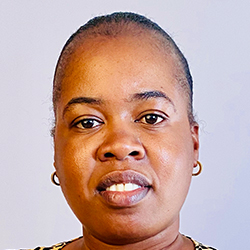
RAINA AUGUSTA
Growing up in Namibia’s remote Rola community, I experienced firsthand the challenges of limited access to technology. This lack of connectivity meant young people in my area struggled to access vital information and opportunities. Determined to change this, I turned to TVET to gain the skills to address these gaps.
Through my training in digital platform development, I created SILA-EB, a system designed to connect underserved communities with essential resources. TVET also gave me the confidence to involve women and youth in using these tools, inspiring them to embrace technology to improve their livelihoods.
Like
Liked
98
people liked this


CÉLIO MONTEIRO JOSÉ
Growing up in Mozambique, I was deeply troubled by the effects of deforestation and environmental degradation in my community. I wanted to show that farming could be both productive and sustainable. Through TVET, I learned climate-smart agricultural techniques, which I now use to train local farmers in practices that preserve the environment while boosting yields.
TVET also equipped me with the tools to develop solutions tailored to my community’s needs, enabling me to make a meaningful difference in their lives.
Like
Liked
389
people liked this

JONATHAN SHAURI KALIBATHA
In Rwanda, I saw potential where others saw waste. Discarded banana stems, often left to rot, inspired me to explore how agricultural waste could be transformed into valuable products. Through TVET, I mastered fibre extraction and textile production, which enabled me to launch Re-banatex.
This initiative produces eco-friendly textiles while creating additional income streams for local farmers. My education also connected me with mentors who supported me in scaling my efforts, turning my vision of sustainability into reality.
Like
Liked
571
people liked this

HUDA ARBAB
In Kenya’s Kakuma Refugee Camp, I saw talented women unable to earn a living due to a lack of market access and training. The skills were there, but the tools to turn them into income were not. Through TVET, I gained modern craft techniques and digital marketing skills, which enabled me to launch Craft for Life, an initiative that helps women transform their talents into marketable products now sold internationally.
TVET also gave me the ability to teach financial literacy, empowering over 75 women to achieve economic independence.
Like
Liked
203
people liked this

ALINE NIYOMUBYEYI'S
In Rwanda, I encountered gender stereotypes that made it difficult for women like me to succeed in technology. Many doubted my ability to lead or create innovative solutions, but I was determined to prove them wrong.
TVET equipped me with automation and app development skills, enabling me to design Sot, a mobile app that improves public transport by letting commuters book tickets and track buses. My work has made transport more accessible, especially for communities with limited access to resources. More importantly, my success is encouraging other women to consider careers in technology.
Like
Liked
98
people liked this